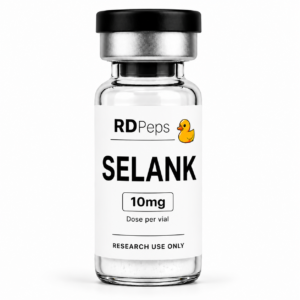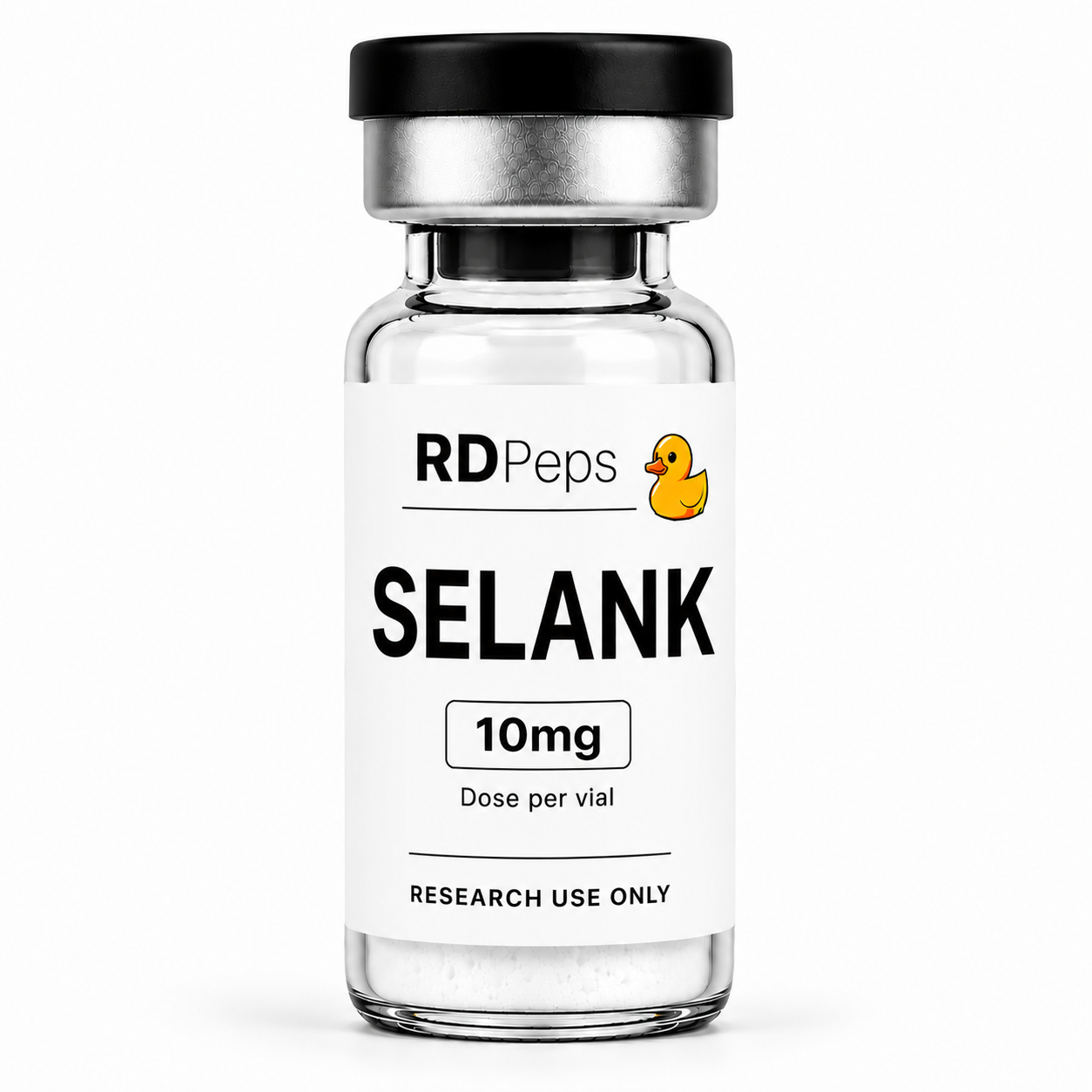
Selank 10mg Vial – Essential Research and Safety Guide
Introduction to Selank 10mg Vial
Selank is a synthetic peptide related to tuftsin, a naturally occurring peptide fragment associated with immune-system activity. It has attracted scientific interest because of research into neurobiological signalling, stress responses, and potential interactions with processes involved in nervous-system function.
The name Selank 10mg Vial describes a product format and stated quantity. The label alone does not establish the product’s identity, purity, safety, or suitability for any particular application.
Understanding Selank’s scientific background and the limitations of available evidence is important when reviewing information about this investigational compound.
What Is Selank?
Selank 10mg Vial is a synthetic heptapeptide, meaning it consists of seven amino acids. It was developed through research involving tuftsin and has been studied primarily in relation to anxiety-related behaviour and neurobiological processes.
Scientific investigations have explored possible interactions with neurotransmitter systems and other biological signalling pathways. However, proposed mechanisms remain incompletely understood, and findings from early research should not be interpreted as proof of clinical effectiveness.
Although Selank 10mg Vial has been discussed in research involving anxiety and cognitive processes, it should not be assumed to provide established benefits for mood, memory, concentration, or other aspects of health.
Scientific Research and Neurobiological Signalling
Research into Selank has examined its potential relationship with several biological pathways involved in nervous-system activity. Some laboratory and animal studies have explored changes in signalling associated with stress responses and neurotransmission.
A limited number of human studies have also been reported, primarily in Russia. However, the available evidence has important limitations, including small study populations and a lack of extensive independent replication.
These limitations make it difficult to draw firm conclusions about effectiveness, long-term outcomes, or the relevance of the findings to broader populations.
Understanding the 10mg Vial Format
The 10mg designation refers to the quantity stated on the product label. It is not a recommended dose, a measure of effectiveness, or confirmation that the product is approved for medical use.
When reviewing information about a research compound, it is important to distinguish the stated quantity from concentration, composition, and verified product identity.
Packaging and labelling alone cannot establish purity, sterility, or suitability for human use. Product documentation should be assessed critically, and claims should be supported by appropriate evidence.
Quality and Documentation Considerations
Clear documentation is an important part of evaluating research materials. Product information should be consistent, traceable, and transparent about the limits of any available testing.
Relevant considerations include:
- Product identification: Check whether the stated compound and quantity are clearly documented.
- Batch traceability: Look for records connecting the material to its stated batch or lot.
- Analytical information: Consider the scope and limitations of any reported testing.
- Packaging integrity: Review whether labelling is legible and packaging is intact.
- Storage information: Consult appropriate documentation and applicable laboratory procedures.
These considerations can support informed evaluation, but documentation alone does not establish that an investigational peptide is safe or effective.
Safety and Regulatory Considerations
Selank’s safety profile has not been adequately established to the standards required for broad medical use in many jurisdictions. Important uncertainties remain regarding potential adverse effects, interactions, long-term outcomes, and the quality of products sold through unregulated channels.
The US Food and Drug Administration has identified potential immunogenicity concerns associated with compounded Selank acetate, including risks related to peptide aggregation and impurities. The agency also notes that important safety information is lacking.
A product labelled Selank 10mg Vial should not automatically be considered an approved medicine. Research findings and online product descriptions are not substitutes for professional healthcare advice or regulatory verification.
Research-labelled materials are not intended for human or veterinary consumption unless the specific product has the necessary authorisation for that use.
Responsible Interpretation of Scientific Evidence
Scientific literature should be interpreted according to the quality of the research, the population studied, and the limitations of each investigation. Findings from laboratory experiments or animal models cannot independently establish benefits in humans.
Responsible evaluation also means distinguishing a proposed biological mechanism from a demonstrated clinical outcome. Further well-designed, independently replicated research would be needed to resolve important questions about Selank’s effects and safety.
Conclusion
Selank 10mg Vial is a product designation associated with Selank, a synthetic peptide investigated for its potential relationship with neurobiological signalling and stress-related processes. While the compound has received scientific attention, significant uncertainties remain regarding its clinical effectiveness, long-term safety, and appropriate applications.
Accurate product identification, careful assessment of available documentation, and a balanced understanding of the scientific evidence are essential when reviewing information about investigational peptides. Selank 10mg Vial Selank 10mg Vial Selank 10mg Vial Selank 10mg Vial