Cagri 5mg Vial – Essential Research and Safety Guide
Introduction to Cagri 5mg Vial
Cagri 5mg Vial is a product name commonly associated with cagrilintide, an investigational peptide studied for its activity in the amylin-related signalling system. Cagrilintide has attracted scientific interest because researchers are exploring how amylin receptor pathways may influence appetite regulation, satiety, and metabolic processes.
Understanding the scientific background of cagrilintide requires distinguishing early research findings from established clinical evidence. Product names and vial quantities alone do not confirm a product’s identity, quality, safety, or suitability for a particular use.
What Is Cagrilintide?
Cagrilintide is a long-acting amylin analogue developed for investigation in metabolic research. Amylin is a hormone naturally produced by pancreatic cells and released alongside insulin in response to food intake. It participates in signalling processes involved in appetite and the regulation of food intake.
Researchers have investigated cagrilintide because its prolonged activity may offer insights into amylin-related pathways. Scientific interest includes understanding how these pathways interact with other systems involved in energy balance and metabolic regulation.
However, an investigational compound should not be treated as an established treatment solely because it has been studied in clinical trials or discussed in scientific publications.
Cagri 5mg Vial: Understanding the Product Format
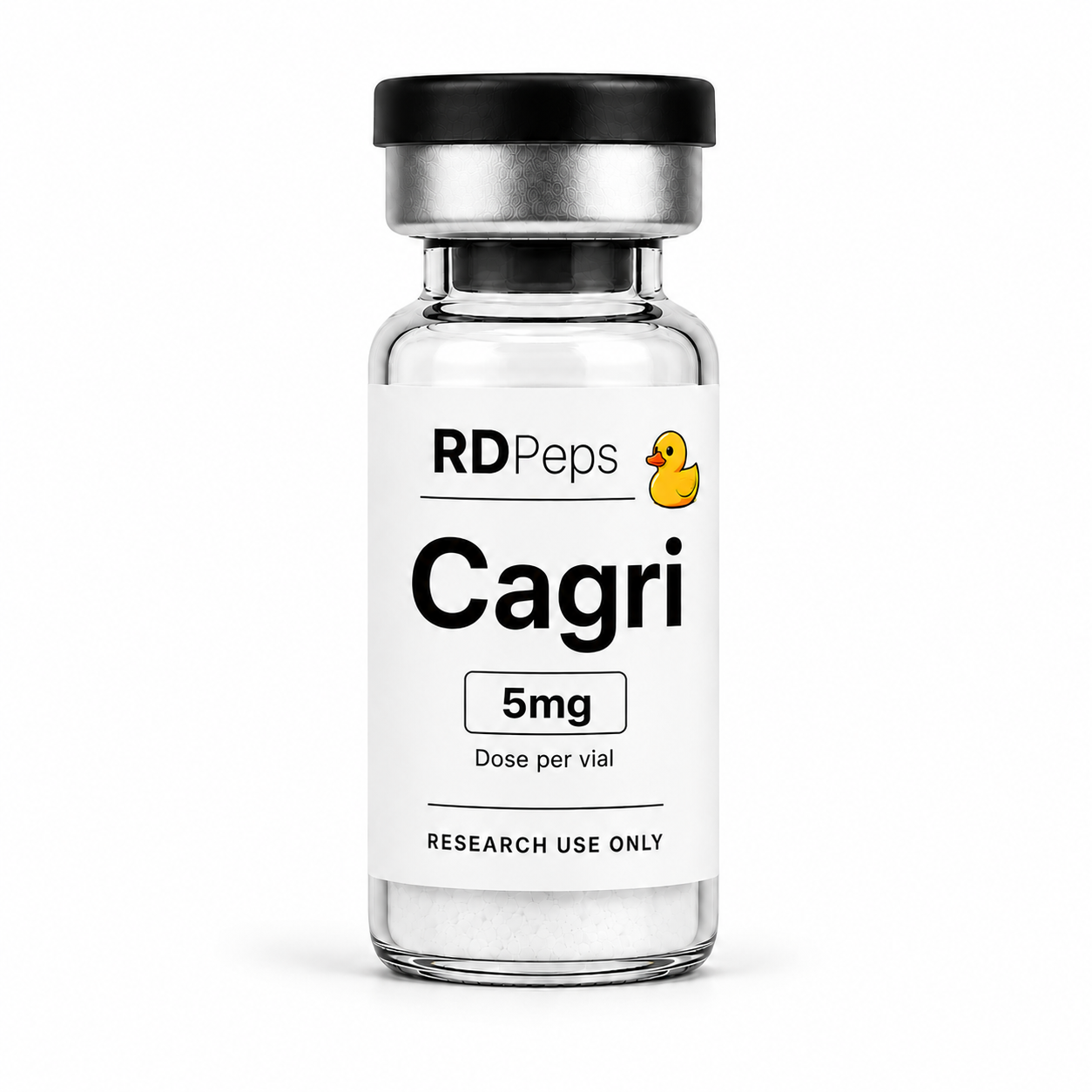
The 5mg designation indicates the stated amount of material associated with the vial. It is not a recommended dose, a measure of effectiveness, or evidence that a product is approved for medical use.
When reviewing a research product, it is important to examine the label, product identification, batch details, and any available analytical documentation. The information should be consistent and traceable to the specific product being evaluated.
Packaging and labelling alone cannot establish a compound’s identity, purity, sterility, or suitability for human use. Appropriate verification and laboratory quality procedures remain important.
Scientific Research and Appetite Signalling
Cagri 5mg vial has been investigated in research examining amylin-related signalling and appetite regulation. These pathways are relevant to scientific efforts to understand the complex communication between the digestive system, brain, and metabolic processes.
Research into such pathways may help scientists better understand satiety signals and how the body responds to food intake. Nevertheless, outcomes can differ according to the study population, research design, and compound being investigated.
Scientific findings should be interpreted in context. Results from one study do not necessarily predict the outcome of another, and research findings should not be presented as guaranteed individual results.
Quality and Documentation Considerations
Responsible evaluation of research compounds includes careful review of available documentation and handling information.
Key considerations include:
- Product identification: Confirm that the product name and stated quantity match the accompanying records.
- Batch traceability: Check for a batch or lot identifier linked to relevant documentation.
- Analytical records: Review available testing information and understand its scope and limitations.
- Packaging integrity: Ensure the label is legible and the packaging has no obvious signs of damage.
- Storage guidance: Follow the manufacturer’s documented requirements and applicable laboratory procedures.
These considerations help support traceability and responsible handling, but they do not independently demonstrate that a product is safe or suitable for human administration.
Safety and Regulatory Considerations
Cagri 5mg vial remains an investigational compound, and its potential risks and benefits must be assessed using appropriate clinical evidence and current regulatory information. Possible adverse effects, interactions, contraindications, and longer-term outcomes require careful evaluation.
A product labelled Cagri 5mg Vial should not automatically be regarded as an approved medicine. Online descriptions are not a substitute for professional healthcare advice or regulatory verification.
Research materials should be used only for their authorised purpose and handled according to applicable safety requirements. They are not intended for human or veterinary consumption unless the specific product has the necessary authorisation for that use.
Anyone considering a product marketed for personal use should consult a qualified healthcare professional rather than relying on seller claims or preliminary research.
Responsible Research and Evidence
Scientific evaluation requires distinguishing established knowledge from emerging findings. Researchers should consider the quality of published studies, independent replication, study limitations, and the regulatory status of the compound.
Clear product information and responsible documentation can support evaluation, but neither guarantees clinical effectiveness nor establishes suitability for a particular application.
Conclusion
Cagri 5mg Vial is associated with Cagri 5mg vial , an investigational peptide studied for its relationship with amylin-related signalling and appetite regulation. Research in this area continues to contribute to scientific understanding of metabolic pathways, while questions about safety, effectiveness, and appropriate applications remain important.
Reviewing product documentation, understanding the limits of available evidence, and following applicable laboratory and regulatory requirements are essential when evaluating investigational compounds.