MOTS-C 10mg Vial – Essential Research and Safety Guide
Introduction to MOTS-C 10mg Vial
MOTS-C is a mitochondria-derived peptide that has attracted scientific interest because of its potential role in cellular metabolism, energy regulation, and metabolic signalling. Unlike peptides encoded by conventional nuclear genes, MOTS-C is associated with mitochondrial DNA and has been investigated in preclinical research exploring communication between mitochondria and other parts of the cell.
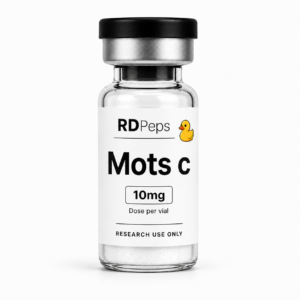
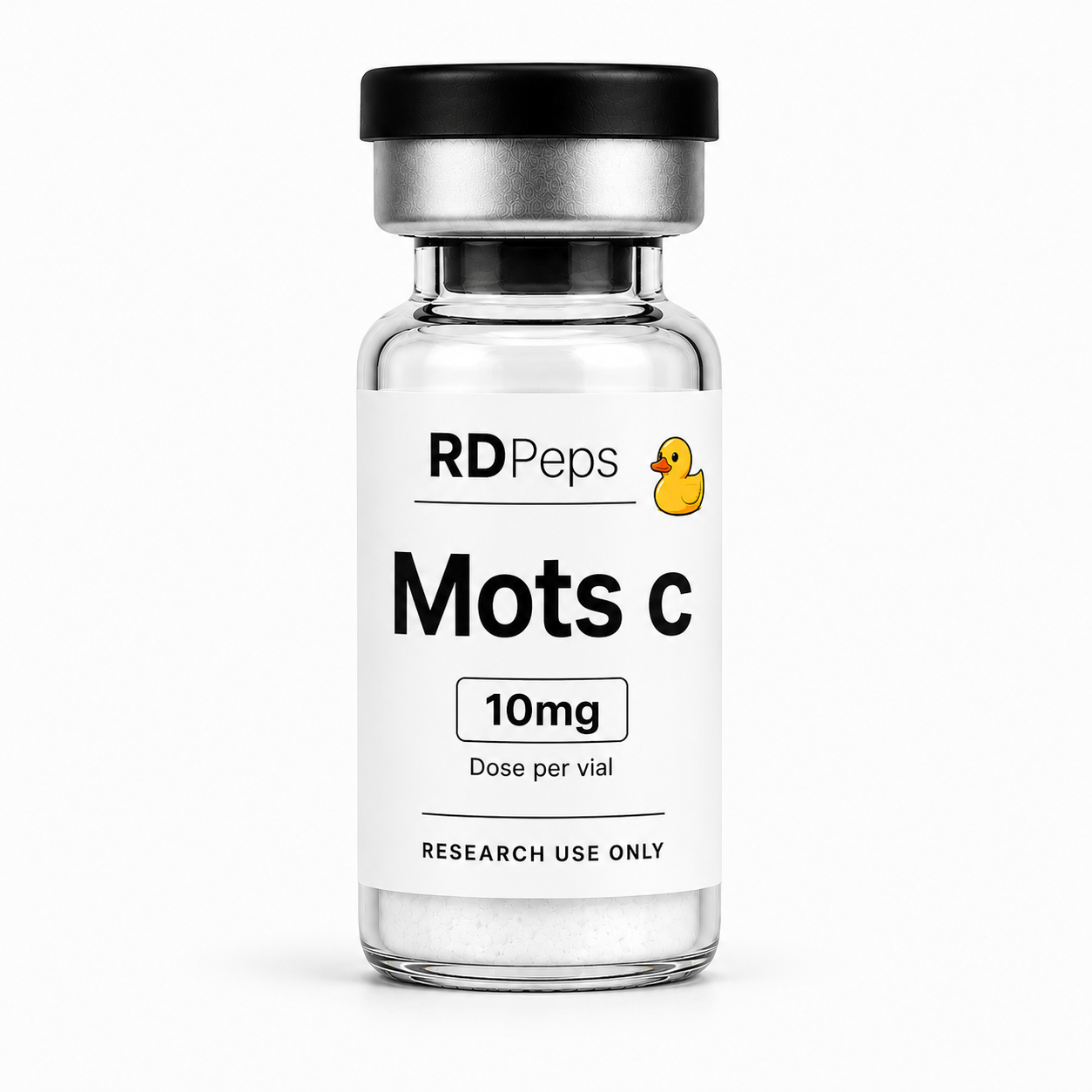
The MOTS-C 10mg Vial is a product format associated with this research compound. Understanding its scientific background, research context, storage requirements, and safety considerations is important when evaluating information about MOTS-C. Product labelling and stated quantity should always be checked against the supplier’s documentation.
What Is MOTS-C?
MOTS-C stands for mitochondrial open reading frame of the 12S rRNA-c. It is a small peptide originally identified through research into mitochondrial-derived signalling molecules. Scientists study these molecules to better understand how mitochondria may influence cellular processes beyond their traditional role in energy production.
Mitochondria are structures within cells that contribute to energy metabolism and several important biological functions. Research into mitochondria-derived peptides has expanded interest in how cellular energy status, metabolic pathways, and stress responses may interact.
MOTS-C remains an area of scientific investigation. Findings from laboratory and animal studies should not be interpreted as proof of effectiveness or safety in humans.
Scientific Research and Metabolic Signalling
One of the main areas of interest in MOTS-C research is its possible relationship with metabolic regulation. Researchers have explored how the peptide may interact with cellular pathways associated with energy balance and metabolic stress.
These investigations may help scientists develop a clearer understanding of mitochondrial communication and its relationship with broader physiological processes. However, the mechanisms involved are complex, and further research is needed to establish the relevance of early findings.
Research findings can vary depending on the experimental model, study design, dosage, and conditions used. A result observed in a laboratory setting does not automatically translate into a predictable outcome in humans.
MOTS-C 10mg Vial: Understanding the Product Format
The 10mg designation describes the stated quantity of material in the vial, rather than a recommended dose or an indication of clinical effectiveness. The amount listed on a product label should be distinguished from concentration, which depends on the total volume when a substance is prepared in a solution.
When assessing a research product, review the label, packaging, batch identification, stated composition, and available documentation. Where applicable, analytical records may provide information about identity and measured characteristics. Documentation should be assessed carefully, and its existence alone does not establish that a product is suitable for human use.
A product’s appearance, packaging, or stated quantity cannot independently confirm its identity, quality, sterility, or suitability for a particular research application.
Quality, Documentation, and Handling
Reliable product documentation is an important consideration when evaluating research materials. Information should be clear, consistent, and traceable to the relevant product or batch.
Researchers and laboratory personnel should consider the following points when reviewing a research compound:
- Product identification: Check that the product name and stated quantity match the accompanying documentation.
- Batch traceability: Look for batch or lot identifiers that connect the product to its records.
- Analytical information: Review any available test documentation and understand the methods and limitations involved.
- Storage information: Follow the manufacturer’s documented storage conditions and handling instructions.
- Packaging integrity: Check that packaging and labels are intact and that relevant information is legible.
These checks support responsible evaluation of laboratory materials. They do not replace independent verification or appropriate institutional procedures.
Safety Considerations
MOTS-C is an investigational peptide, and its safety profile in humans has not been adequately established. It should not be assumed to be safe because it is discussed in scientific literature or marketed online.
Potential uncertainties include adverse effects, interactions with medicines or other substances, long-term effects, and differences between experimental findings and human responses. The risks associated with an individual product may also depend on its identity, composition, manufacturing quality, and handling.
A vial labelled MOTS-C 10mg should not be interpreted as an approved medicine or as evidence of an established treatment. Products intended for laboratory research should be handled only within appropriate facilities and under applicable safety procedures. They are not intended for human or veterinary consumption unless the relevant product has the required authorisation for that use.
Anyone considering a product marketed for personal use should consult a qualified healthcare professional rather than relying on online product descriptions or preliminary research.
Responsible Research and Information
Responsible scientific evaluation requires distinguishing established evidence from emerging hypotheses. Published studies can provide useful background, but their conclusions should be considered alongside study limitations, independent replication, and the quality of available evidence.
Researchers should consult relevant scientific literature, institutional guidance, and applicable regulations before working with investigational compounds. Product descriptions should not substitute for experimental protocols, professional advice, or formal safety assessments.
Conclusion
MOTS-C 10mg Vial is associated with scientific interest in mitochondrial-derived peptides and their possible relationship with cellular energy metabolism and metabolic signalling. Current research provides a basis for further investigation, but important questions about human safety, effectiveness, and appropriate applications remain unresolved.
Careful review of product documentation, transparent identification, responsible laboratory handling, and a clear understanding of the evidence are essential when evaluating MOTS-C. Maintaining a research-focused perspective helps ensure that scientific findings are not confused with established medical benefits or approved uses. MOTS-C 10mg Vial MOTS-C 10mg Vial MOTS-C 10mg Vial MOTS-C 10mg Vial MOTS-C 10mg Vial MOTS-C 10mg Vial MOTS-C 10mg Vial