Retatrutide 30mg Vial – Research Overview, Scientific Background and Safety Information
Understanding Retatrutide 30mg Vial
Retatrutide is an investigational compound being studied for its effects on metabolic regulation and energy balance. It has attracted scientific interest because it acts on three hormone receptors involved in metabolic processes: the glucose-dependent insulinotropic polypeptide (GIP) receptor, the glucagon-like peptide-1 (GLP-1) receptor, and the glucagon receptor.
The combination of these three mechanisms distinguishes retatrutide from compounds that target only one or two of these pathways. Researchers are investigating how this combined activity influences glucose regulation, appetite, energy expenditure, and other metabolic outcomes.
What Does Retatrutide 30mg Vial Mean?
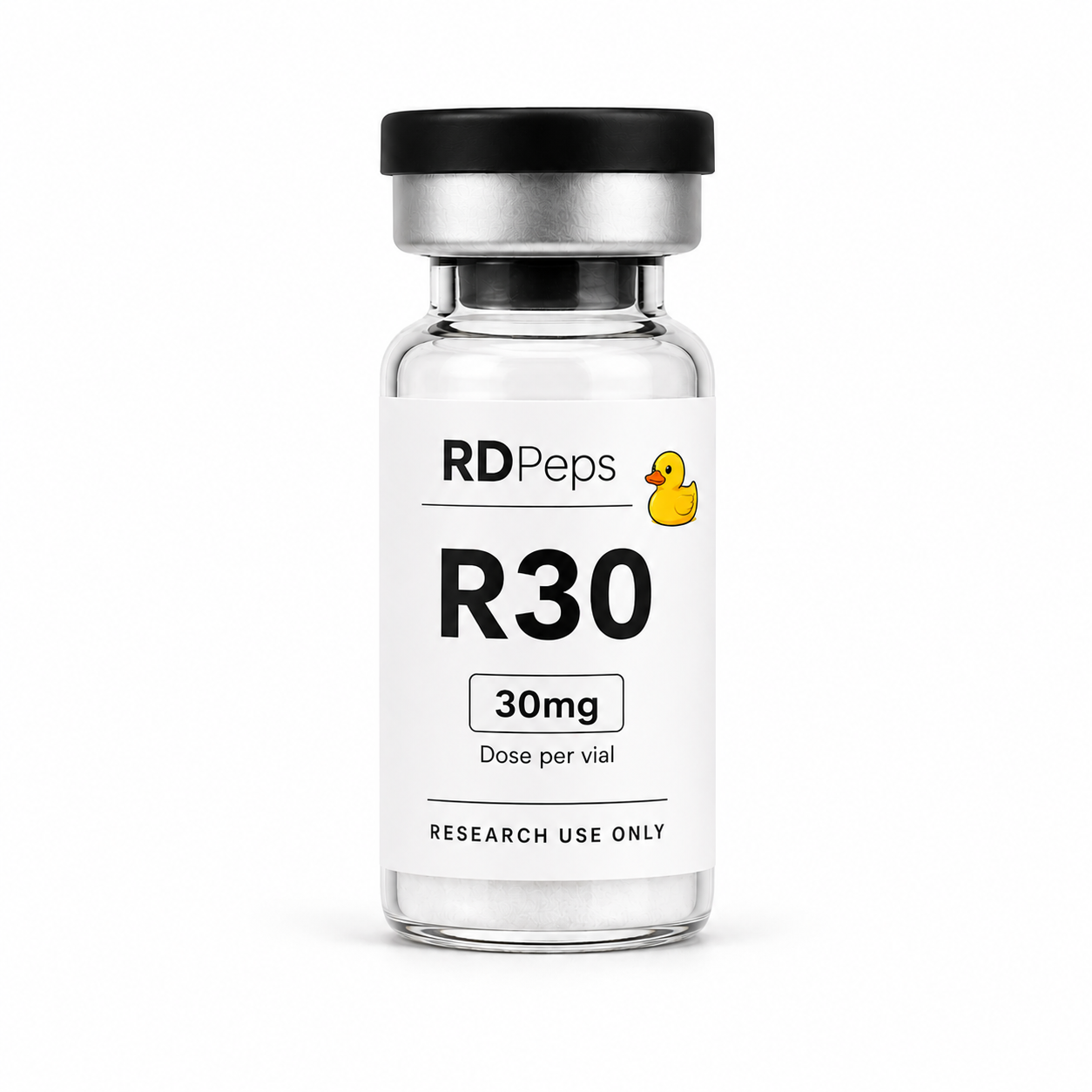
The term “Retatrutide 30mg Vial” describes a product label indicating a stated quantity of 30 milligrams associated with a vial. However, the label alone does not establish the product’s identity, concentration, purity, sterility, or suitability for any particular purpose.
Product descriptions should be interpreted carefully. The amount stated on a label is not necessarily the concentration of a prepared solution, and it does not establish a clinically appropriate dose. Verification of a product’s composition requires reliable documentation and appropriate analytical assessment.
How Retatrutide Works
Retatrutide 30mg Vial is being investigated for its interaction with three receptor pathways associated with metabolic regulation.
GIP receptor activity: Glucose-dependent insulinotropic polypeptide is involved in the body’s response to food intake and glucose metabolism. Its receptor is one of the pathways researchers are studying in relation to retatrutide.
GLP-1 receptor activity: The GLP-1 pathway contributes to glucose-dependent insulin secretion and appetite regulation. Medicines acting on this pathway have helped establish the importance of incretin biology in metabolic research.
Glucagon receptor activity: Glucagon plays a role in regulating energy availability and glucose metabolism. Researchers are studying how glucagon receptor activity may contribute to the overall effects of retatrutide.
The combined activity of these receptors is a central focus of ongoing research. However, the long-term implications and appropriate clinical applications of retatrutide require further evidence.
Current Research and Clinical Investigation
Retatrutide has been investigated in clinical studies examining metabolic outcomes, including body weight and measures associated with glucose regulation. Early research has generated interest in its potential applications, but promising findings from clinical trials do not automatically establish long-term safety or regulatory approval.
Clinical research proceeds through structured phases designed to assess safety, tolerability, effectiveness, and potential adverse effects. Results must be evaluated in the context of study design, participant characteristics, follow-up duration, and limitations.
It is important to distinguish investigational findings from established clinical recommendations. Retatrutide should not be treated as interchangeable with approved medicines, and research findings should not be interpreted as instructions for individual treatment.
Quality, Identity and Laboratory Documentation
When evaluating scientific information concerning an investigational compound, documentation and verification are important considerations. A product label or online description alone cannot confirm the identity or quality of the material.
Relevant analytical information may include compound identity, analytical methodology, sample traceability, and the limitations of any reported results. Documentation should be assessed in context rather than treated as automatic proof of quality or suitability.
A certificate of analysis, when available, should be reviewed for the identity of the tested sample, the methods used, the issuing laboratory, and the scope of the reported findings. Such a document does not independently establish sterility, clinical safety, or regulatory authorization.
Safety and Regulatory Considerations
Retatrutide 30mg Vial remains an investigational medicine. Its safety profile, potential adverse effects, and long-term outcomes continue to require appropriate scientific and clinical evaluation.
Unverified products may present additional risks because their identity, contents, storage conditions, and manufacturing standards may be uncertain. An online listing cannot establish that a product is authentic, sterile, or suitable for human use.
Individuals seeking treatment for a medical condition should consult a qualified healthcare professional about approved options and appropriate care. Investigational compounds should not be self-administered or substituted for prescribed treatment.
Regulatory status varies by jurisdiction and may change as research progresses. Current information should be obtained from relevant medicines regulators and official clinical-trial records.
Frequently Asked Questions
What is retatrutide?
Retatrutide 30mg Vial is an investigational compound being studied for its activity at GIP, GLP-1, and glucagon receptors.
What does 30mg indicate on a vial label?
It indicates a stated quantity on the product label. It does not independently confirm concentration, composition, purity, or an appropriate dose.
Is retatrutide an approved medicine?
Retatrutide remains investigational and has not been established as an approved medicine for routine public use. Check the relevant regulator for the latest status in your jurisdiction.
Can an online product label verify quality?
No. A label alone cannot confirm identity, purity, sterility, or clinical suitability. Reliable documentation must be assessed within its proper context.
Conclusion
Retatrutide 30mg Vial is a search term associated with an investigational compound receiving scientific attention for its activity across three metabolic receptor pathways. Understanding its mechanism, clinical research, documentation limitations, and regulatory status is essential when evaluating information about retatrutide.
Accurate scientific communication should distinguish investigational evidence from established medical guidance and emphasize responsible research, transparent documentation, and patient safety.