NAD+ 500mg Vial – Research Overview, Cellular Energy and Safety Guide
Understanding NAD+ 500mg Vial
NAD+ (nicotinamide adenine dinucleotide) is a coenzyme found in living cells and involved in numerous biological processes. It plays an important role in cellular energy metabolism, helping enzymes carry out reactions that support normal cell function.
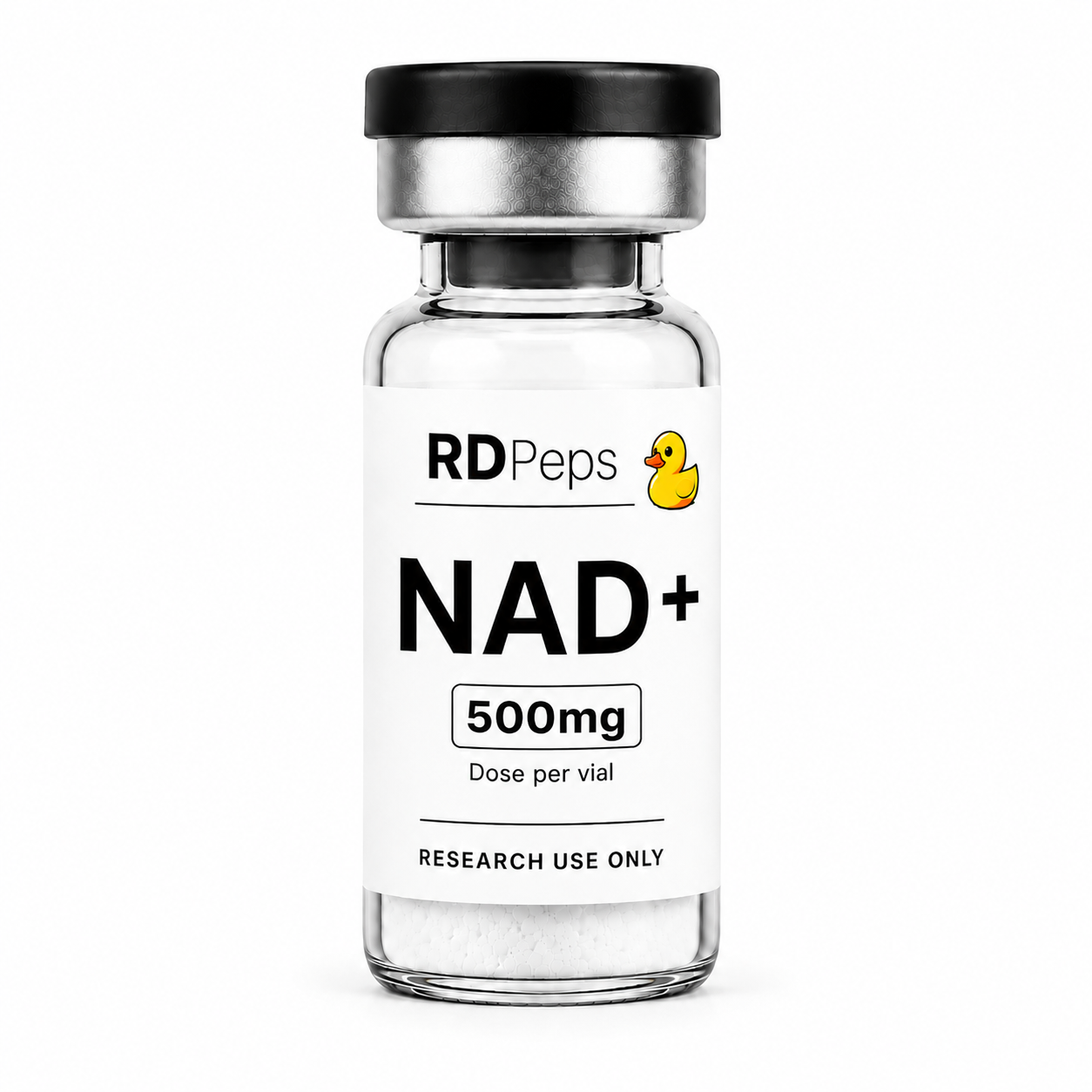
The term NAD+ 500mg Vial refers to a product description indicating a stated quantity of 500 milligrams. However, a product label alone cannot confirm its composition, purity, concentration, sterility, or suitability for a particular application.
Understanding NAD+, its biological functions, and the scientific research surrounding it provides useful context for evaluating information about products labelled with this compound.
What Is NAD+?
NAD+ 500mg Vial is a coenzyme derived from vitamin B3-related metabolic pathways. It participates in oxidation-reduction reactions, which allow cells to transfer electrons during important biochemical processes.
One of its best-known functions is supporting cellular energy production. NAD+ accepts electrons during metabolic reactions and becomes NADH, its reduced form. NADH can subsequently contribute to processes involved in generating ATP, the molecule cells use to store and transfer energy.
Beyond energy metabolism, NAD+ 500mg Vial is involved in several enzyme systems associated with cellular maintenance, signalling, and metabolic regulation. These functions have made NAD+ an important subject in biochemistry, molecular biology, and ageing-related research.
The Role of NAD+ in Cellular Energy Metabolism
Cells require energy to maintain their structure, carry out biochemical reactions, and respond to changes in their environment. NAD+ helps facilitate the reactions that connect nutrient metabolism with cellular energy production.
During glycolysis and other metabolic pathways, NAD+ participates in reactions that transfer electrons between molecules. Its conversion to NADH allows those electrons to be used in subsequent energy-producing processes.
NAD+ also participates in mitochondrial metabolism, where several pathways contribute to ATP production. Mitochondria are specialised cellular structures that play a central role in energy conversion.
The relationship between NAD+ availability, cellular metabolism, and biological function remains an active area of scientific investigation. Findings from laboratory studies must be distinguished from evidence demonstrating a clinical benefit in humans.
NAD+ and Cellular Research
Researchers investigate NAD+ because of its involvement in metabolic reactions and enzyme activity. Scientific studies examine how NAD+ levels change under different biological conditions and how these changes relate to cellular processes.
One area of interest involves sirtuins, a family of enzymes that depend on NAD+ to perform their functions. Another involves poly(ADP-ribose) polymerases, commonly known as PARPs, which participate in cellular responses to DNA damage.
NAD+ is also studied in relation to metabolic signalling and mitochondrial function. These research areas contribute to a broader understanding of how cells regulate energy use, respond to stress, and maintain biological processes.
Although these findings provide important scientific insights, they do not establish that every NAD+-labelled product produces a particular health outcome. The effects of a compound depend on its formulation, route of administration, biological availability, and the evidence supporting the specific application.
Understanding the 500mg Vial Label
A label stating 500mg indicates a declared quantity associated with the product. It does not independently verify the material’s identity, concentration, purity, formulation, or intended use.
When reviewing information about an NAD+ product, it is important to distinguish the amount stated on the label from the concentration of any prepared solution. These are different measurements and should not be treated as interchangeable.
Packaging and online product descriptions also cannot independently establish authenticity or pharmaceutical quality. Reliable assessment requires appropriate documentation and evidence relevant to the product in question.
Quality Documentation and Product Verification
Accurate product information is an important consideration when evaluating scientific materials. Relevant documentation may include compound identification, batch traceability, analytical methods, storage requirements, and information about the organisation responsible for testing.
A certificate of analysis may provide results for a particular sample, depending on the testing methods and scope of the report. Readers should consider the issuing laboratory, sample identification, testing date, and characteristics actually measured.
A certificate does not automatically establish sterility, clinical safety, or authorization for human use. Quality claims should reflect the evidence available and avoid conclusions that the documentation cannot support.
Safety and Storage Considerations
The safety of an NAD+ product depends on its formulation, intended application, quality, and route of exposure. Products sold in different forms may have different requirements and risk profiles.
A vial labelled NAD+ 500mg should not be assumed to be suitable for injection, ingestion, or another form of human use simply because of its packaging or stated quantity.
Storage conditions should be established from reliable product-specific documentation rather than general assumptions. Improper storage or uncertain manufacturing conditions may affect product integrity.
Anyone considering NAD+ for a medical purpose should consult a qualified healthcare professional. Product labels and online descriptions should not replace medical advice, and unverified products should not be used as substitutes for authorized treatments.
Frequently Asked Questions
What is NAD+?
NAD+ is a coenzyme involved in cellular energy metabolism, oxidation-reduction reactions, and several enzyme systems associated with cellular function.
What does NAD+ 500mg Vial mean?
It describes a product labelled with a stated quantity of 500 milligrams. The label alone does not establish the product’s concentration, purity, sterility, or suitability for human use.
Why is NAD+ studied in scientific research?
Researchers study NAD+ because of its involvement in energy metabolism, mitochondrial processes, cellular signalling, and enzyme activity.
Does a certificate of analysis guarantee quality?
No. A certificate provides information about the tested sample and measured characteristics. It does not automatically confirm sterility, clinical safety, or regulatory authorization.
Is every NAD+ vial suitable for human use?
No. Suitability cannot be determined from the product name or stated quantity alone. Formulation, manufacturing standards, documentation, and regulatory status are important considerations.
Conclusion
NAD+ 500mg Vial is a product-description term associated with nicotinamide adenine dinucleotide, a coenzyme essential to many cellular processes. Its role in energy metabolism, mitochondrial function, and cellular signalling makes NAD+ an important subject in biochemical research.
When evaluating information about NAD+ products, readers should distinguish established biological functions from unproven health claims. Accurate documentation, transparent product information, responsible handling, and appropriate attention to safety are essential.
Research and safety notice: This article provides general scientific information and is not medical advice. A product labelled NAD+ 500mg should only be used for its verified, lawful intended purpose. NAD+ 500mg Vial NAD+ 500mg Vial NAD+ 500mg Vial NAD+ 500mg Vial